| Date | 1534–1535 |
| Event | Münster Rebellion |
| Outcome | Defeat of the Melchiorites, restoration of Catholic and Protestant control |
| Location | |
| Participants | |
| Significance | Spread of radical Anabaptist and reform movements in Europe following the rebellion |
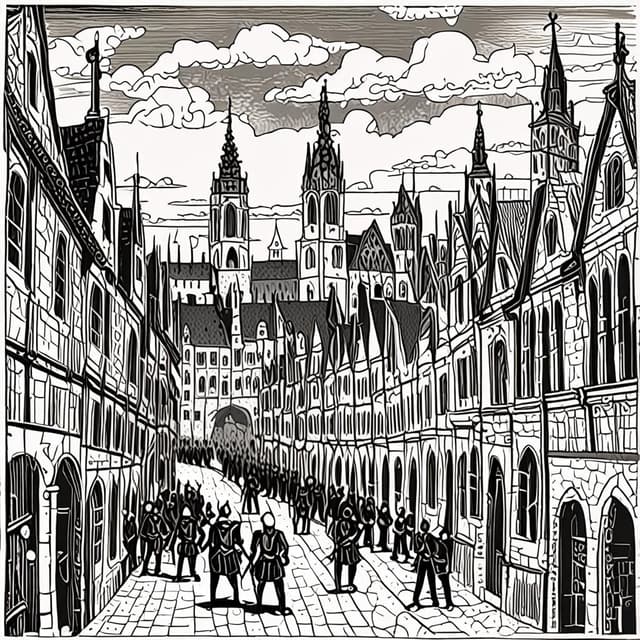
The Münster Rebellion was a religious and social uprising that occurred in the city of Münster, in the Holy Roman Empire, from 1565 to 1569. Led by a radical Anabaptist group known as the Melchiorites, the rebels seized control of the city and established a theocratic, communistic state they called the "New Jerusalem." The Münster Rebellion was eventually suppressed, but its impact on the growth of Anabaptism and other revolutionary movements would be felt across Europe in the decades to come.
The Melchiorites were a faction of the broader Anabaptist movement, named after their charismatic leader Melchior Hoffmann. Originating in the Netherlands, the Melchiorites preached a fiercely egalitarian and millenarian theology, advocating the imminent return of Christ and the creation of a communal, theocratic society on Earth.
In the early 1560s, the Melchiorites gained a substantial following among the urban poor and disaffected populations in the Holy Roman Empire, particularly in the city of Münster. Münster's Prince-Bishop, Franz von Waldeck, cracked down on the Melchiorites, but they managed to seize control of the city in a violent coup in 1565.
Once in power, the Melchiorites quickly set about transforming Münster into their vision of the "New Jerusalem." All private property was abolished, with communal ownership and distribution of wealth instituted. Polygamy was mandated as a means of ensuring the rapid growth of the faithful. Dissenters and non-Melchiorites were systematically purged, often through public executions.
The regime was led by the self-proclaimed "King of the New Jerusalem," Jan van Leiden, along with a council of "apostles." They justified their actions through a radical reinterpretation of scripture and the imminent expectation of Christ's return to earth. Münster became an isolated theocratic state, cut off from the surrounding Holy Roman Empire.
The establishment of the Melchiorite regime in Münster sparked outrage among both Catholic and Protestant powers in the Empire. In 1566, a coalition force led by Prince-Bishop Franz von Waldeck laid siege to the city, determined to crush the Anabaptist rebellion.
After over a year of brutal fighting and the gradual starvation of the Münster population, the city fell in June 1569. Thousands of Melchiorites were slaughtered, and the surviving leaders - including Jan van Leiden - were tortured and executed. The collapse of the "New Jerusalem" sent shockwaves across Europe.
The Münster Rebellion marked a critical turning point in the growth and suppression of radical Anabaptist movements in the Holy Roman Empire and beyond. While the Melchiorite regime was brutally crushed, Anabaptism continued to spread, with new sects and communities emerging across the continent.
The rebellion also contributed to the heightening of religious and political tensions in the Holy Roman Empire, paving the way for the outbreak of the Schmalkaldic War and the broader European Wars of Religion. It became a touchstone for both religious reformers and opponents of radical change, shaping the trajectory of the Protestant Reformation.
The Münster Rebellion's legacy as a symbol of utopian, communistic and millenarian aspirations persisted, inspiring future social and political movements that sought to radically transform society. Its influence can be seen in later Anabaptist communities, Puritan settlements, and even the emergence of modern communism.
